

Hanoi's simultaneous launch of five urban railway lines—with a combined length of more than 300 kilometers and an estimated investment exceeding VND 1.3 quadrillion—marks the beginning of a new era in the Capital's transportation infrastructure. Beyond addressing growing mobility demands, the expanding metro network is expected to become a catalyst for urban transformation, reshaping the city's spatial development, unlocking new growth corridors, and enhancing the overall quality of urban life.
The five newly initiated lines—Metro Lines 1, 2, 8, 10, and 14—will connect key destinations, from Noi Bai International Airport and Hanoi's city center to Hoa Lac, Gia Lam, and the rapidly developing southern urban districts. Together with Metro Lines 3 and 5, which are already under development, these projects will gradually establish an integrated citywide public transportation network, fundamentally redefining connectivity between the urban core and Hanoi's emerging growth hubs.
Within this evolving urban landscape, western and southwestern Hanoi are poised to become strategic focal points. The area is home to many of the Capital's major transport corridors, administrative institutions, convention and exhibition facilities, commercial centers, educational establishments, and large-scale urban developments. Complemented by the metro network, Thang Long Boulevard, Ring Road 3, and a series of ongoing infrastructure upgrades, the district is steadily evolving into one of Hanoi's most comprehensively connected and dynamic urban destinations.

Among the five newly launched metro projects, Metro Line 8 is expected to have the most significant impact on western Hanoi. Stretching from Hoa Lac – Son Dong – Mai Dich – Ring Road 3 – Linh Nam – Duong Xa, the line will establish a continuous east–west transport corridor, connecting many of the Capital's key centers for science, technology, commerce, and urban development.
Complementing this network, Metro Line 5, linking Van Cao – Ngoc Khanh – Lang – Hoa Lac, is planned to run along the Thang Long Boulevard corridor and is widely regarded as one of the transport projects with the greatest strategic significance for western Hanoi. As these metro lines gradually become operational and integrate into a comprehensive transit network, residents will enjoy greater mobility, reduced dependence on private vehicles, and more convenient access to Hanoi's administrative, commercial, and economic centers.
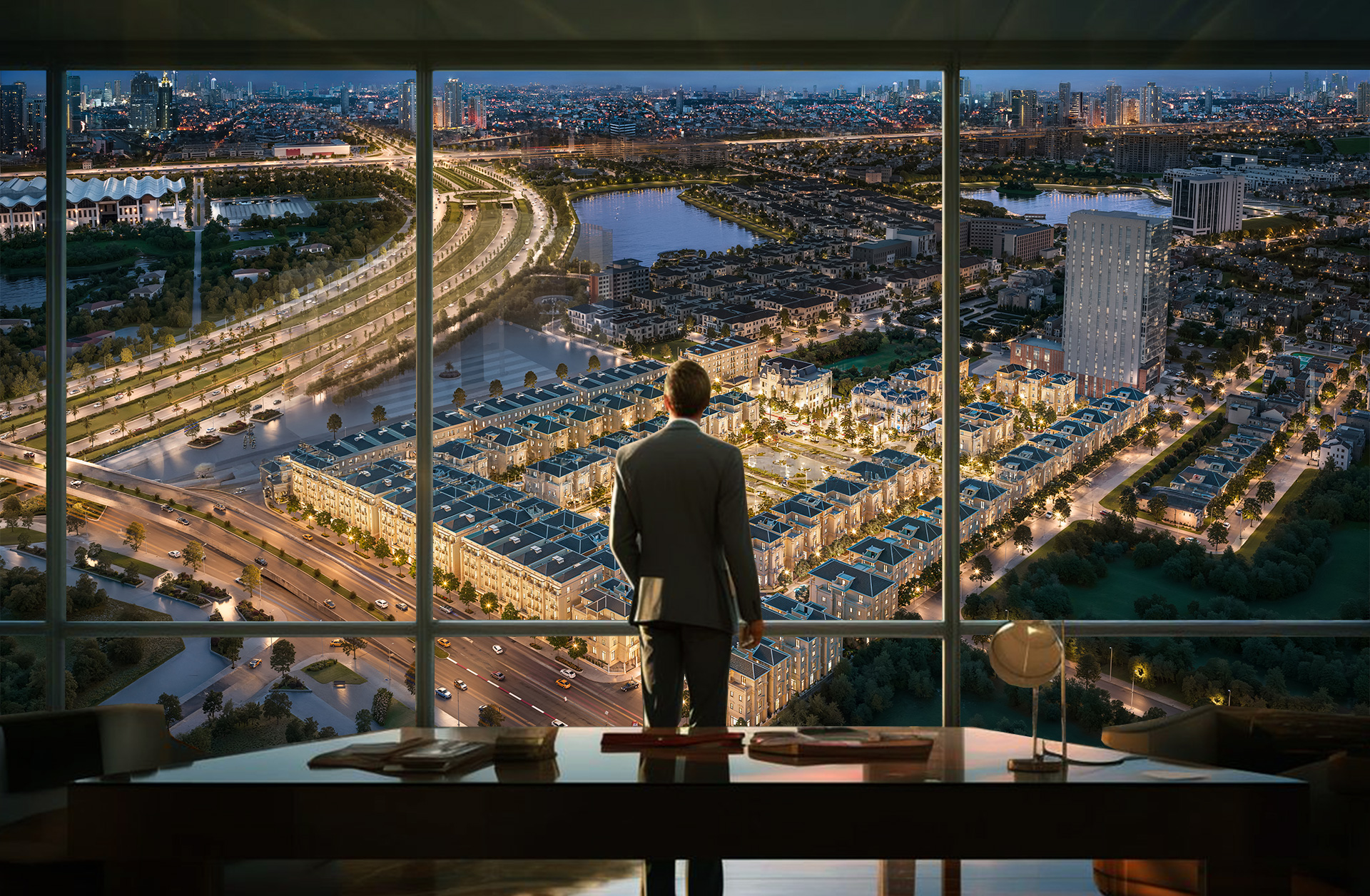
Situated in Dai Mo Ward, within the dynamic growth corridor of southwestern Hanoi, The President Park is well positioned to benefit from this rapidly evolving infrastructure landscape. From the development, residents enjoy seamless access to Thang Long Boulevard, Ring Road 3, and other major transport arteries, providing convenient connections to the National Convention Center, the My Dinh precinct, and an established network of premium amenities and services.
For The President Park, the value of the metro network extends far beyond proximity to any single station or transit line. Its true advantage lies in the comprehensive connectivity created by a synchronized, multimodal transportation system. Each new metro line broadens the city's accessibility, eases pressure on the road network, and brings southwestern Hanoi closer to the Capital's most important destinations.
For a low-rise villa community, however, infrastructure should be measured not only by convenience but also by its contribution to quality of life. Excellent connectivity allows residents to remain closely connected to the city's opportunities and vibrancy, while a location set apart from heavily congested traffic corridors preserves the privacy and tranquility essential to everyday living.
This is one of The President Park's defining strengths—close enough to embrace the energy and momentum of Hanoi, yet thoughtfully positioned to offer a private sanctuary at the end of every journey home. As the supply of low-rise residential land within the urban core becomes increasingly scarce, the combination of a strategic location, exceptional connectivity, and a refined living environment forms the foundation of the project's enduring appeal.
The expansion of Hanoi's metro network therefore represents far more than the introduction of a new mode of transportation. It signals a fundamental transformation in the city's urban structure—strengthening regional connectivity, unlocking new development potential, and creating fresh momentum along emerging growth corridors. Within the evolving landscape of western Hanoi, The President Park stands as an exclusive residential destination, where an increasingly integrated transportation network brings the city within easy reach, while home remains a place of privacy, comfort, and quiet retreat.
Source of information and images: Compiled from Vtv.vn anh https://baoxaydung.vn/


 0853 58 79 79
