

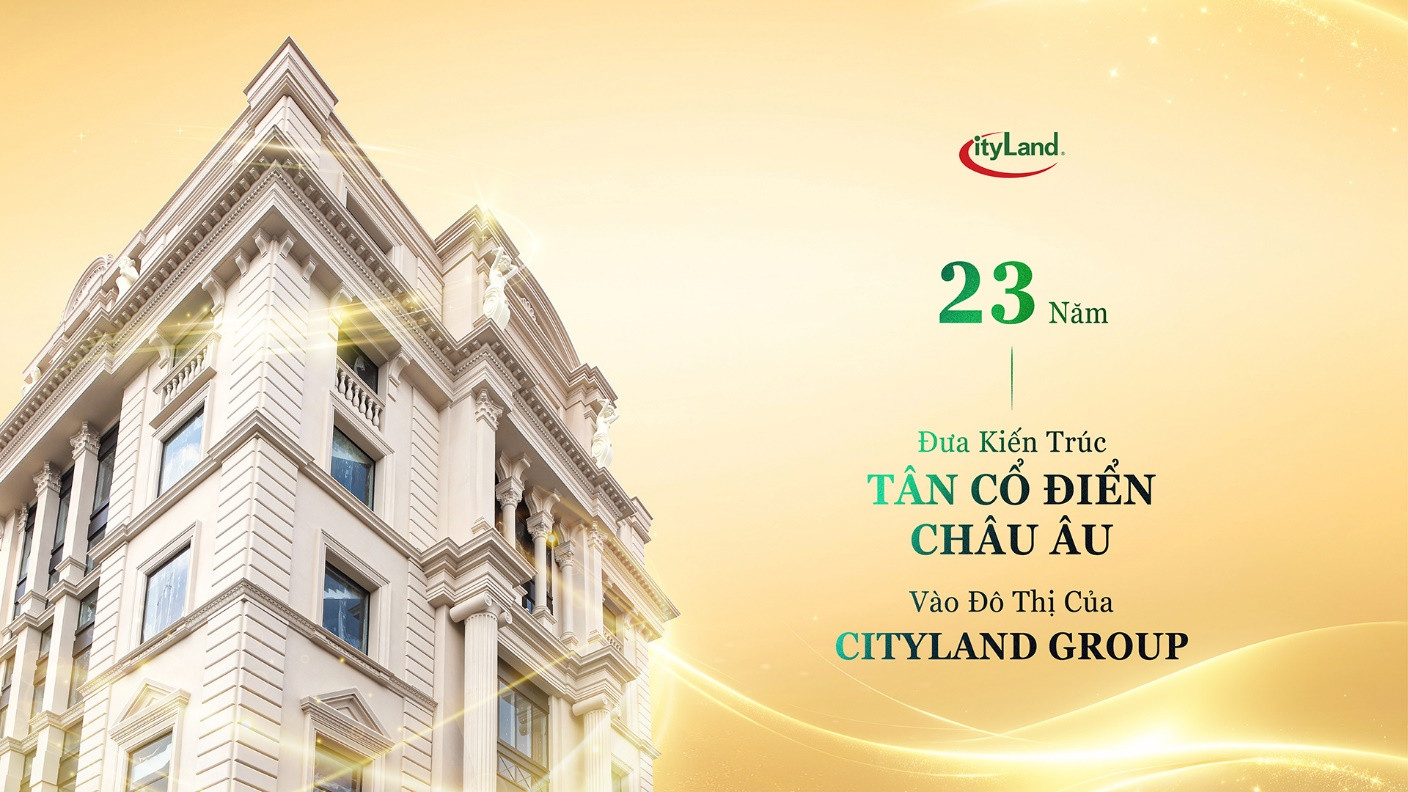
(VTC News) – Over 23 years of establishment and development, European Neoclassical architecture has become a defining thread running through CityLand Group’s townhouse and villa developments.
The architectural identity of a real estate developer is shaped by consistency in both the choices it makes and the way it brings its design language to life over time. For CityLand, the spirit of European Neoclassical architecture is not a passing stylistic choice, but an architectural direction pursued since its earliest developments and carried forward across diverse project types and scales.
A Consistent Architectural Language
Balanced proportions and the distinctive characteristics of European Neoclassical architecture are consistently expressed across CityLand’s townhouse and villa developments. Within this framework, building forms and functions are thoughtfully arranged to respond to Vietnam’s climate, landscape, and patterns of everyday living.

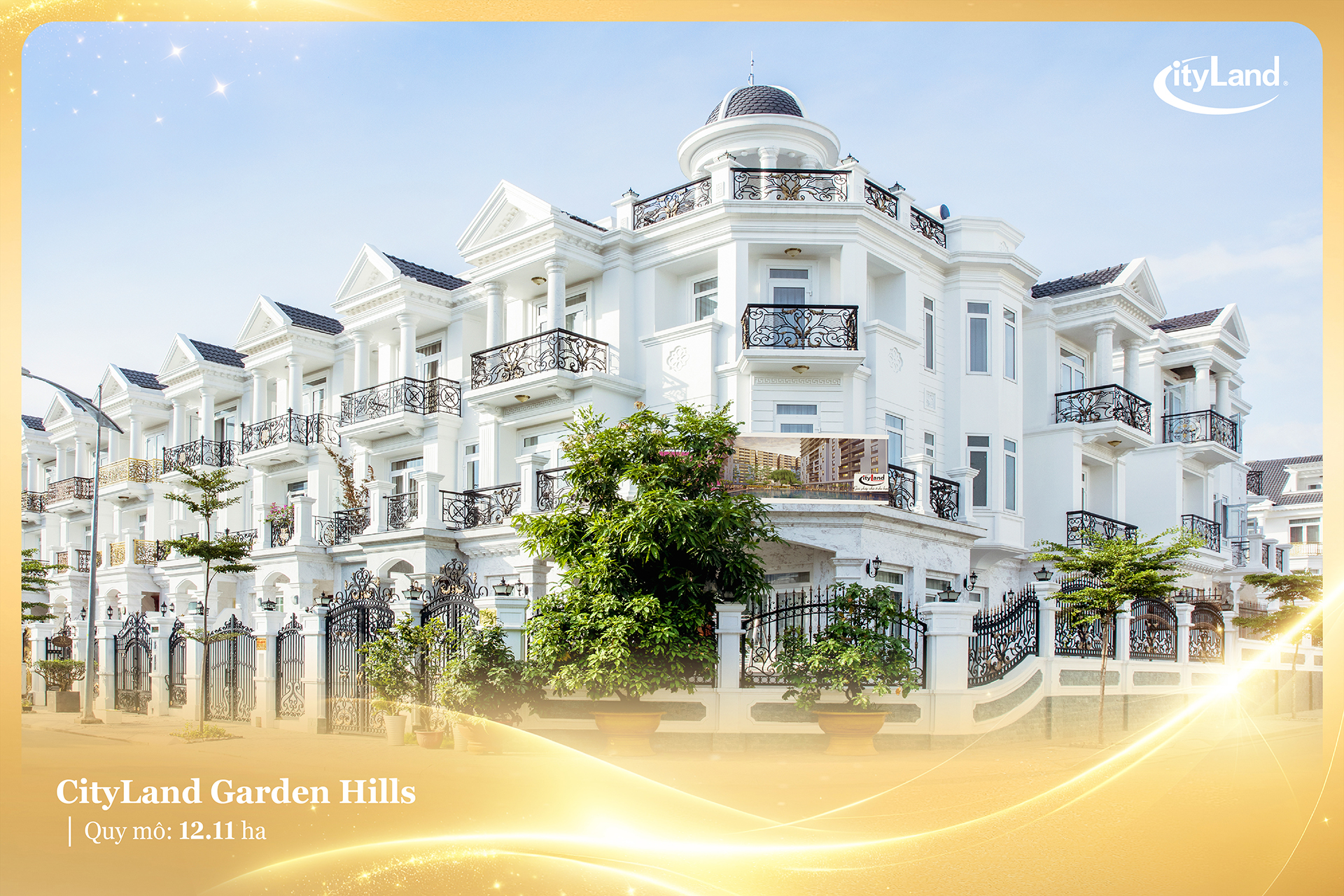
At CityLand Garden Hills and CityLand Center Hills in northern Ho Chi Minh City, this architectural language is expressed through cohesive rows of townhouses, villas, and commercial spaces. In the southern part of the city, CityLand Riverside carries the same language forward within a setting closely integrated with riverside landscapes.
The consistent presence of these defining architectural elements across successive developments has gradually established a distinct identity for CityLand. While the overarching architectural style remains coherent, the planning of layouts, landscapes, and functions is carefully considered in response to the characteristics of each location.

From Architectural Identity to Urban Structure
This evolution became more pronounced at CityLand Park Hills, a nearly 27-hectare urban development spanning the Phan Van Tri and Nguyen Van Luong corridors, with nearly 2,000 properties comprising villas, townhouses, commercial townhouses, and apartments.
Here, the low-rise precinct continues the European Neoclassical language established through CityLand’s earlier developments. Its larger scale also places the architecture within a multifunctional urban structure, connecting residential areas with schools, a shopping centre, healthcare services, conference facilities, parks, and public squares.

At the heart of this setting, the 15,000-square-metre Hoa Binh Square musical fountain, designed by architects from Takenaka, serves as both a defining landscape feature and a communal gathering space. The integration of architecture, amenities, and landscape reflects CityLand’s evolution from developing individual buildings to shaping a cohesive living environment.
Beyond low-rise residential developments, CityLand has also extended its European architectural inspiration into commercial and office spaces. Located within CityLand Park Hills, Park Hills Palace is a mixed-use development with approximately 13,500 square metres of total floor area, designed to accommodate working, business activities, and events. The project further expands the development’s amenity offering while completing its overall functional structure.
Continuing the Architectural Language in Hanoi
Following a series of established developments in Ho Chi Minh City, CityLand is expanding its development journey to Hanoi in 2026 with The President Park, a low-rise residential development spanning approximately 6 hectares in Dai Mo Ward.

As land availability for low-rise residential development in well-connected areas of the capital becomes increasingly limited, each new development faces higher expectations in terms of planning, quality of living spaces, and long-term utility and value. This is also the context in which CityLand continues to carry forward an architectural identity refined and strengthened over more than two decades.
Featuring a collection of detached villas, semi-detached villas, and townhouses, European Neoclassical architecture at The President Park is expressed through balanced architectural proportions, refined lines, distinctive roof forms, and generous windows that welcome abundant natural light. The low-rise residences are conceived in close relationship with the surrounding landscape and on-site amenities, seeking a harmonious balance between aesthetics, functionality, and the lived experience.
The President Park thus serves as a bridge between the foundation CityLand has built over 23 years and the new chapter now unfolding in Hanoi. From Ho Chi Minh City to the capital, consistency in architectural direction has become a continuous thread, contributing to the evolution of CityLand’s identity at every stage of its development.
Source: vtcnews.vn

 0853 58 79 79
